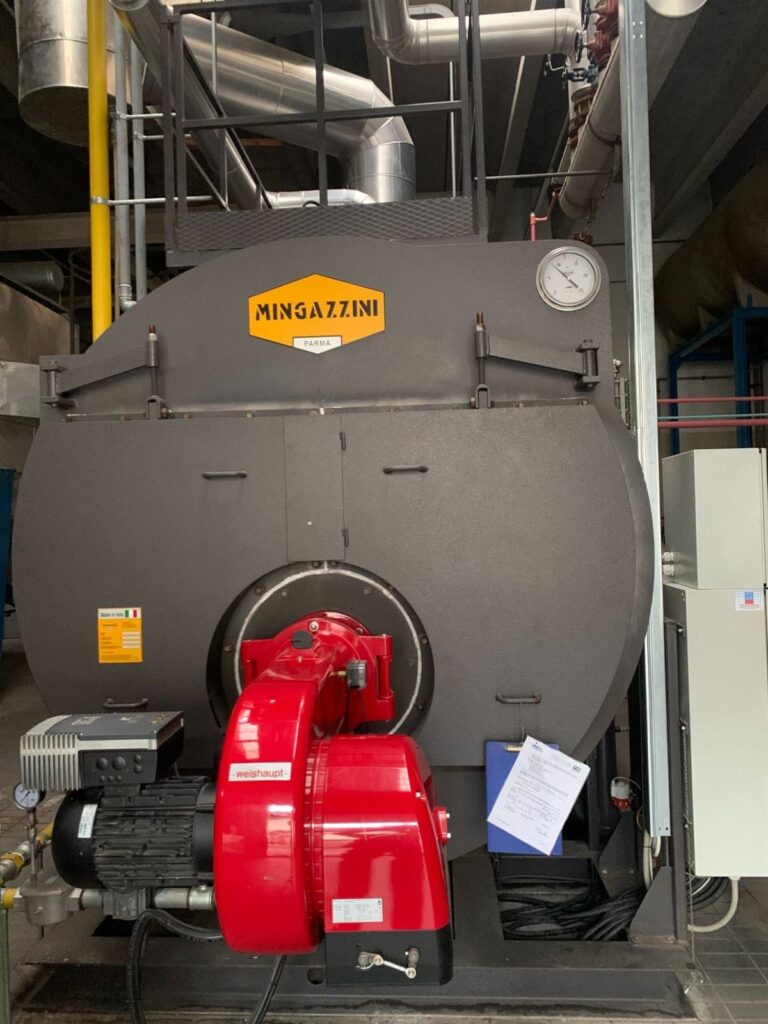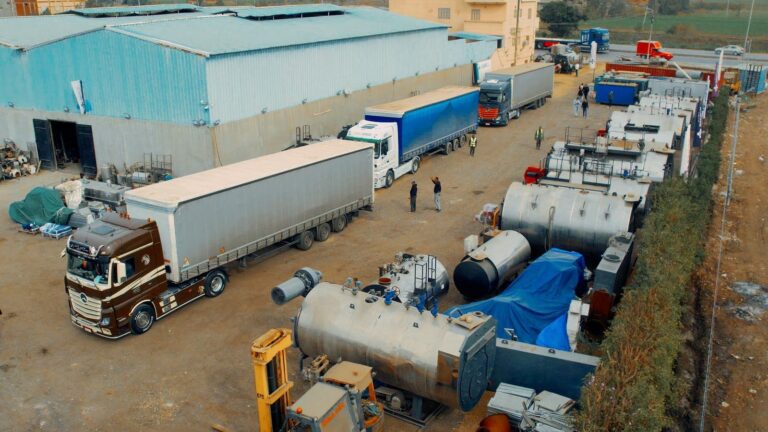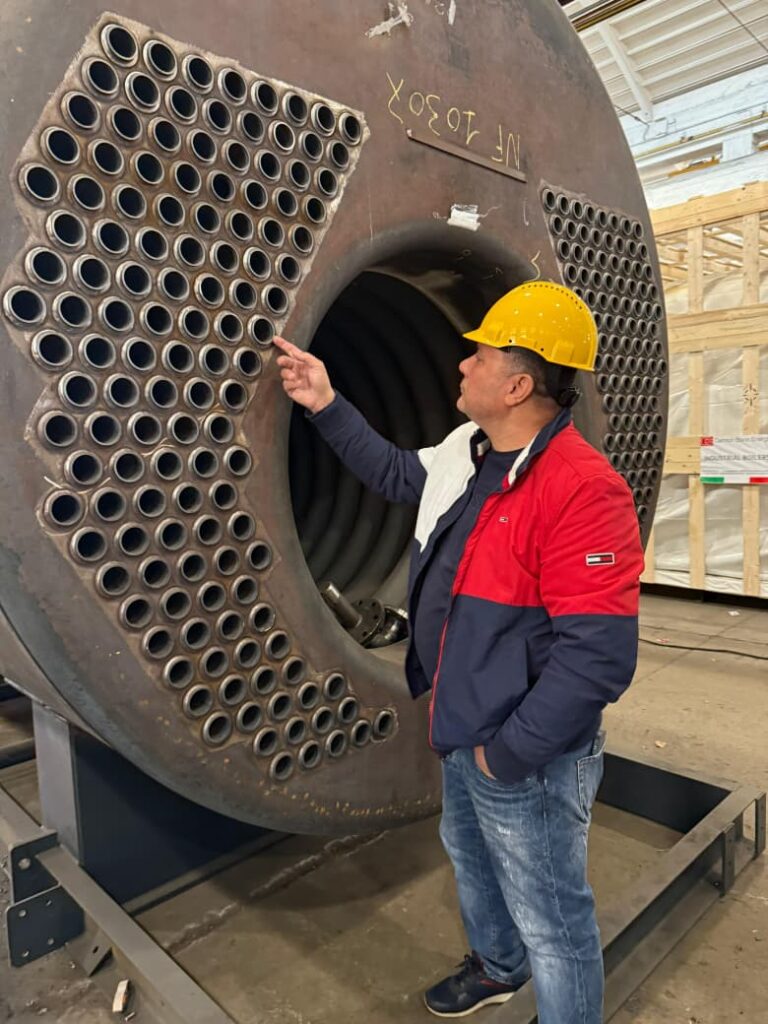


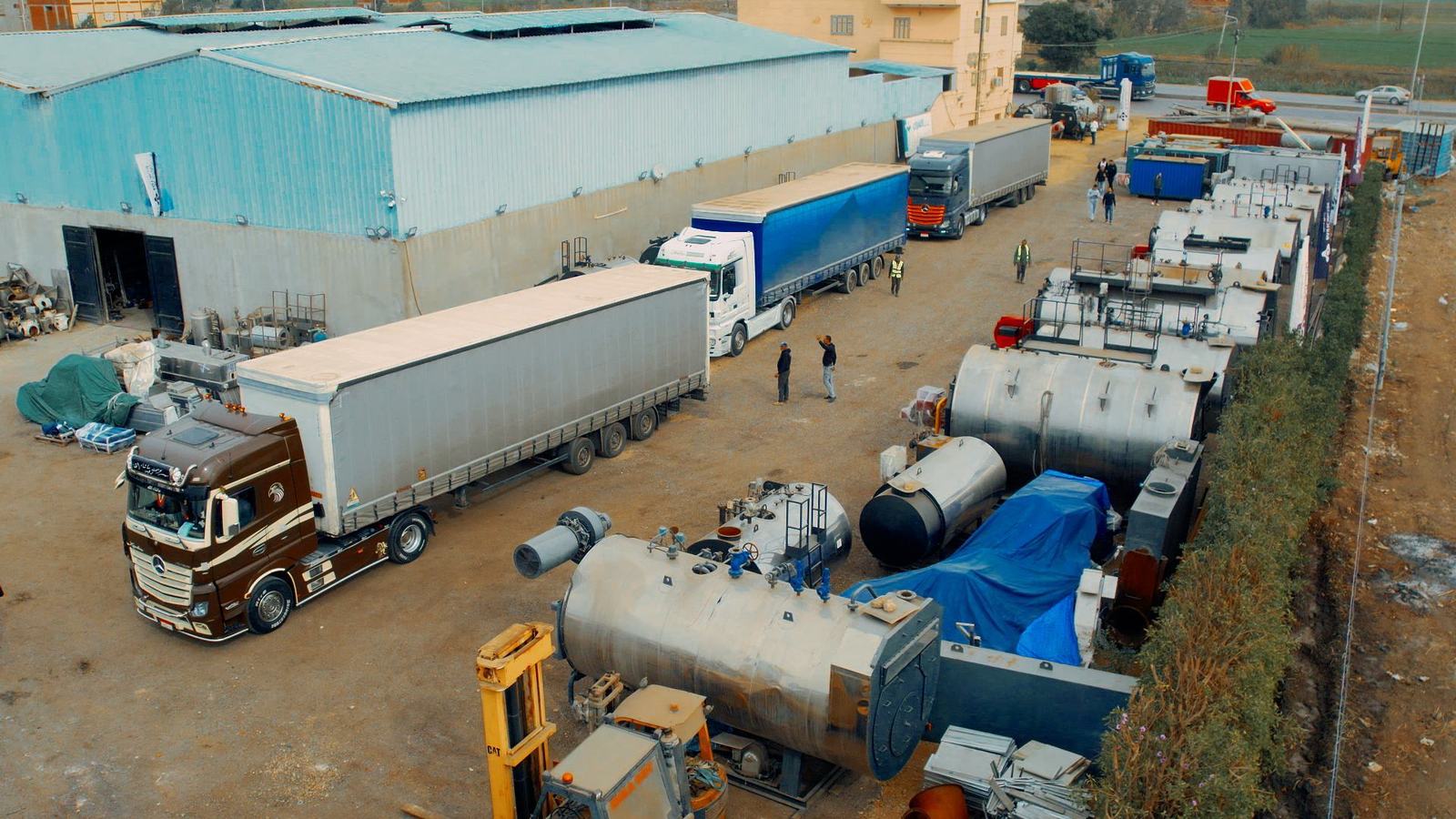
An undersized boiler stops production at peak times, while an oversized one cycles on and off, wasting fuel and shortening burner life. Here are the practical steps to estimate the right capacity in kilograms of steam per hour.
1. Add up the consumption of every consumer
List every piece of equipment that uses steam (kettle, dryer, heat exchanger, dyeing machine…) with its consumption in kg/h from the nameplate or the manufacturer’s catalogue.
2. Account for simultaneous use and peaks
Equipment rarely runs at full load at the same moment. Identify which consumers run together at the toughest point of the day and size for that. Also watch start-up periods, when demand is higher.
3. Add losses and a safety margin
Add pipe losses, leaks and a safety margin — typically 15–25% — and take any planned expansion over the coming years into account.
4. Define the required pressure
Pressure sets the saturated steam temperature: about 175 °C at 8 bar(g) and about 184 °C at 10 bar(g). Choose the pressure for the highest temperature your processes need, plus a small margin.
Worked example
| Consumer | Consumption (kg/h) |
|---|---|
| Cooking kettle | 600 |
| Heat exchanger | 400 |
| Washing & sterilising line | 300 |
| Total | 1,300 |
| With a 20% margin | ≈ 1,560 |
Result: a 2 t/h steam boiler covers today’s demand with room to grow.
Useful conversions
- 1 t/h of steam ≈ 0.65–0.7 MW (depending on pressure and feed-water temperature).
- 1 boiler horsepower (BHP) ≈ 15.65 kg/h of steam, so 1 t/h ≈ 64 BHP.
Tip: if downtime is costly, consider two smaller boilers instead of one large unit — one handles light loads and the other stays on standby during maintenance.
Need help choosing?
Our engineers will review your site and recommend the right boiler — free of charge.